

Large Elm Tree Pruning in Takapau — Why This Work Matters (And What We Did)
Job completed: 30 July 2026 | Location: Takapau, Central Hawke’s Bay
When a large Elm tree starts pushing outward in every direction, it’s not just an eyesore — it’s a hazard waiting to happen. That’s exactly what we found when we arrived at a residential property in Takapau last week for a two-day pruning job that reminded us why this kind of structural work is so important to get right.
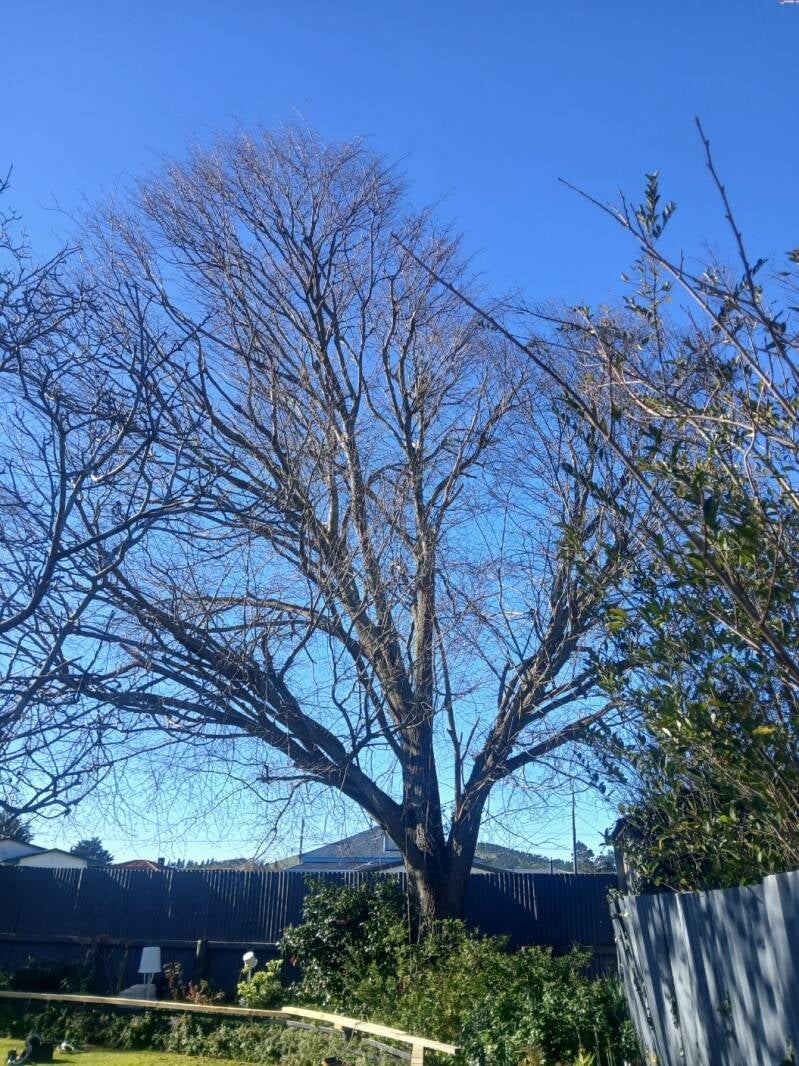
Before pruning — the Elm tree with dense, crossing canopy
Why Elm Trees Need Regular Structural Pruning
Elms are wonderful trees — big, broad, and full of character. But left unmanaged, they develop problems that get worse with every passing season.
Dead limbs become heavy and brittle, especially after wind events. Crossing branches rub against each other, damaging bark and creating entry points for decay and disease. Dense canopy growth blocks airflow, which increases the risk of fungal problems. And as the crown grows larger and heavier, the leverage on the trunk and main scaffold branches increases — a real concern in Central Hawke’s Bay where we get some serious nor’westers.
Signs your Elm may need attention:
- Branches visibly crossing or rubbing
- Dead wood scattered through the canopy
- Sections of the crown that look sparse, yellowing, or dying back
- Overextended limbs with a lot of weight on the ends
- Debris dropping more than usual after wind
Catching these things early — rather than waiting until a branch comes down on a fence, a car, or a roof — is almost always cheaper and safer.
What the Job Involved
We started the assessment on 29 July and got straight into the work. The tree was substantial — the kind that demands respect and a proper plan before a chainsaw goes anywhere near it.
Our climber went up into the canopy with ropes and a chainsaw, working methodically through the crown. The work covered three main areas:
Dead and damaged wood removal — anything that was already dead or structurally compromised came out first. This is the most straightforward part, but it’s essential. Dead wood has no structural integrity and can snap without warning.
Crossing limb removal — branches that were rubbing against or growing through each other were addressed next. Left in place, these cause bark damage and eventually open wounds in the tree.
Crown reduction and thinning — we took back the overall size of the canopy and opened it up from the inside. This reduces the sail effect in wind, improves light penetration, and puts less stress on the main structure.
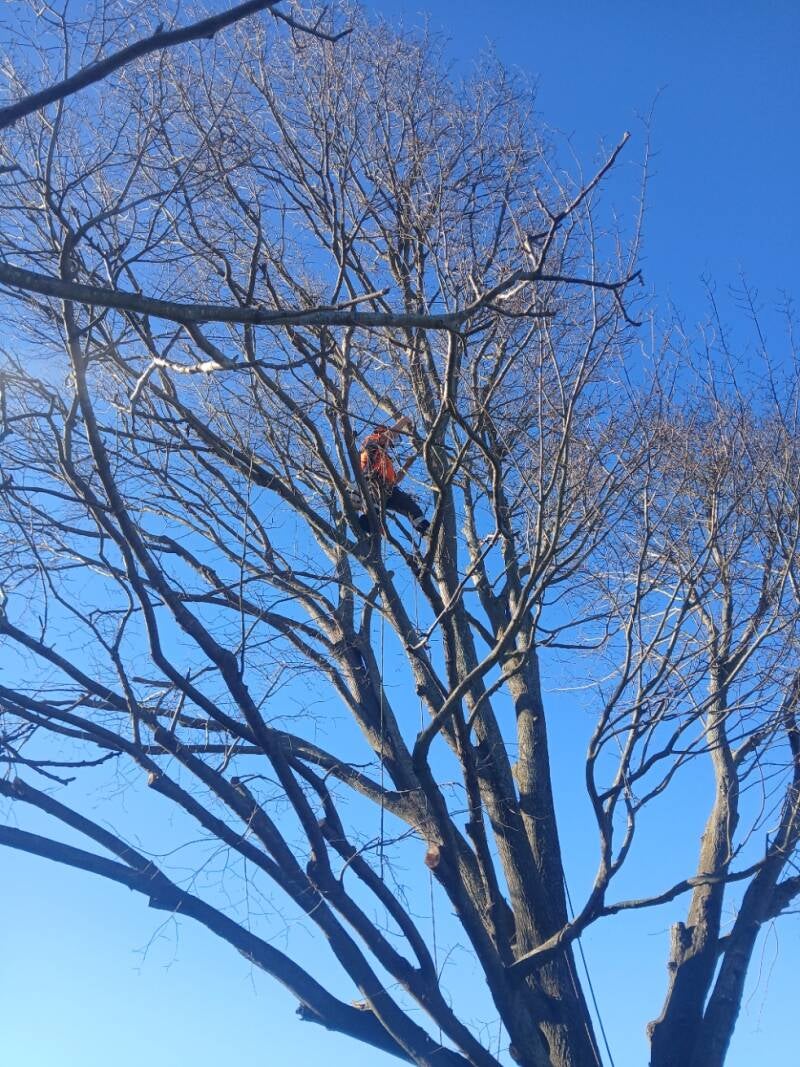
Climber working up in the Elm canopy — ropes and chainsaw work
The second day was all about completion — finishing the upper canopy work, cleaning up what we’d taken out, and making sure the cuts were done properly to support the tree’s long-term health. A poor pruning cut can cause more problems than it solves, so this isn’t work you want rushed.
The Result
By the time we packed up on 30 July, the difference was clear. The tree has structure again — a healthy framework with good airflow, no dead material hanging in the canopy, and a crown that’s proportionate to the tree rather than growing away from it in all directions.
The property owner can go into the next few seasons knowing the tree is in a good state, without the worry that comes with a neglected canopy full of dead wood and weak limbs.
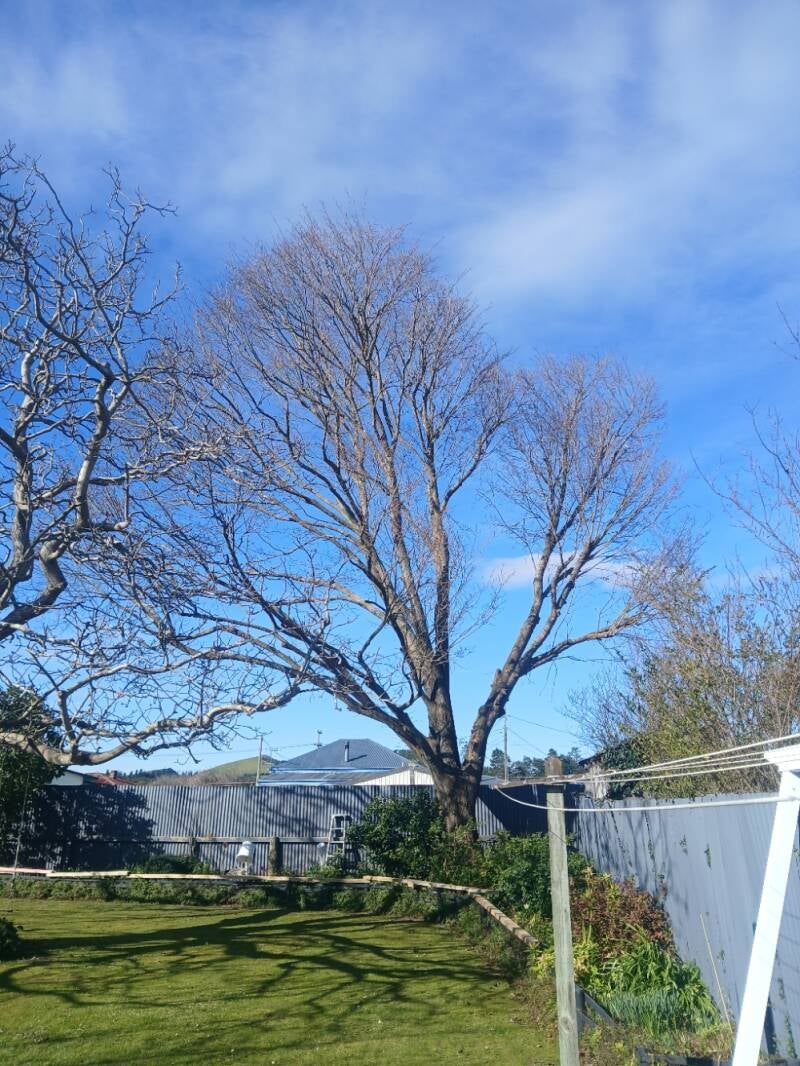
After pruning — the Elm with a clean, open canopy structure
A Note on Timing
Winter is actually one of the better times to prune large deciduous trees like Elms. With the leaves off, it’s far easier to see the branch structure clearly — dead wood, crossing limbs, and weak attachments are all visible that a full summer canopy would hide. It also reduces stress on the tree during active growth periods.
If you’ve got an Elm, a large Ash, or any other mature deciduous tree on your property and you’re not sure what state it’s in, winter is a good time to have it looked at.
Based in Takapau? We Cover the Whole Region
We’re Legacy Tree Specialists — three generations of arborists based in Otane, Central Hawke’s Bay. Brendon has been doing this work for over 15 years, and jobs like this one in Takapau are exactly what we do, day in and day out, across the region from Dannevirke through to Napier and all the coastal towns in between.
We’re a family business, not a franchise. When you call us, you get people who know this landscape and genuinely care about the trees and properties we work on.
If you’ve got a large tree that needs attention — whether it’s an Elm, a Macrocarpa, a Poplar, or anything else — we’re happy to come out and have a look. No obligation, no jargon. Just an honest assessment and a fair quote.
Call Brendon: 021 818 926
Email: admin@legacytreespecialists.co.nz
Web: legacytreespecialists.co.nz